|
1
|
|
|
2
|
|
|
3
|
|
|
4
|
|
|
5
|
|
|
6
|
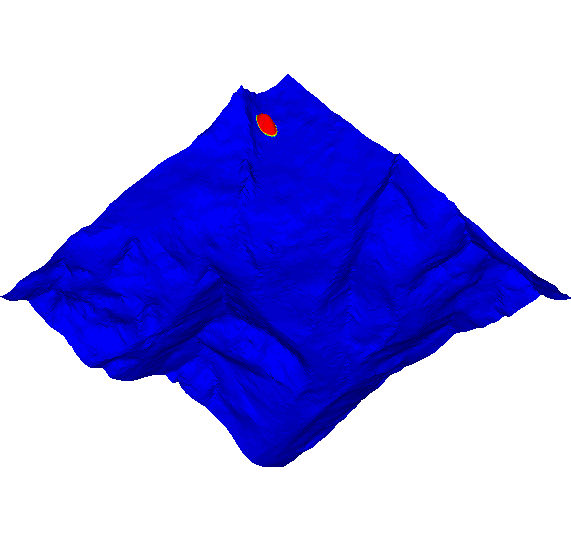
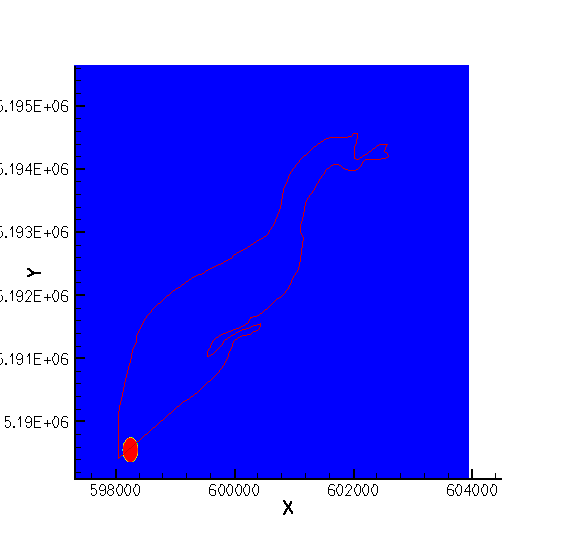
- Simulation environment, currently for dry flow only
- Integrate GRASS GI data for topographical map
- High order numerical solver, adaptive mesh, parallel computing
- Extension to include erosion (Bursik)
|
|
7
|
|
|
8
|
|
|
9
|
- Mass flows containing fluid ubiquitous and important
- Iverson (’97) 1D Mixture model; Iverson and Denlinger 2D mixture model
and simulations
- How to model fluid/pore pressure motion?
|
|
10
|
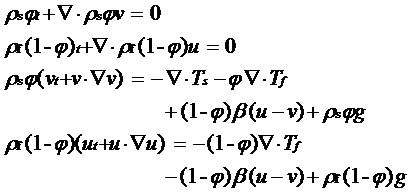
- Model equations used in engineering literature
- Continuum balance laws of mass and momentum for interpenetrating solids
and fluid
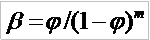
- Drag terms transfer momentum
|
|
11
|
|
|
12
|
|
|
13
|
|
|
14
|
- Characteristic length scales (mm to km)
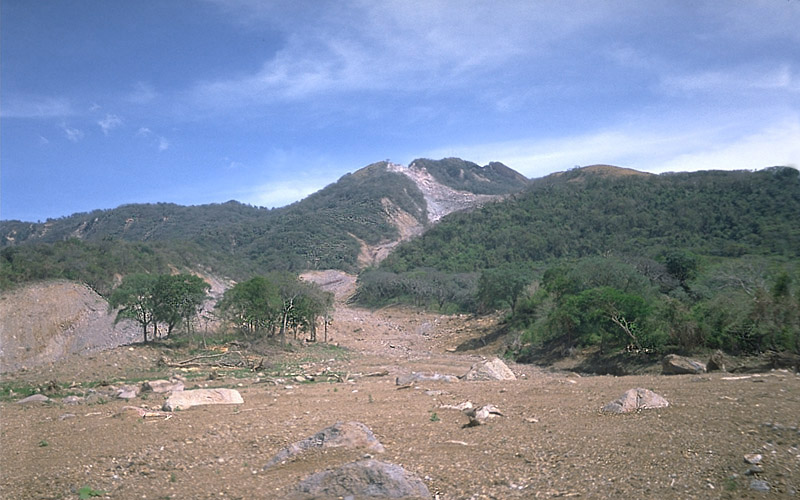
- e.g for Mount St. Helens (mudflow –1985)
- Runout distance »
31,000 m
- Descent height »
2,150 m
- Flow length(L) »
100-2,000
- Flow thickness(H) »
1-10 m
- Mean diameter of sediment material 10-3-10 m
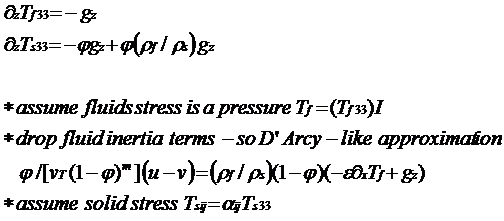
- Scale: ε═H/L – several terms small and are dropped
- (data from Iverson 1995, Iverson & Denlinger 2001)
|
|
15
|
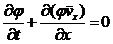
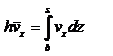
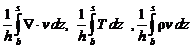
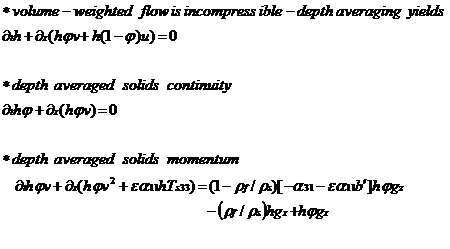
- Depth average
- solids conservation:
- where
|
|
16
|
|
|
17
|
|
|
18
|
|
|
19
|
|
|
20
|
|
|
21
|
|
|
22
|
|
|
23
|
|
|
24
|
|
|
25
|
- Mixed hyperbolic-parabolic system
|
|
26
|
|
|
27
|
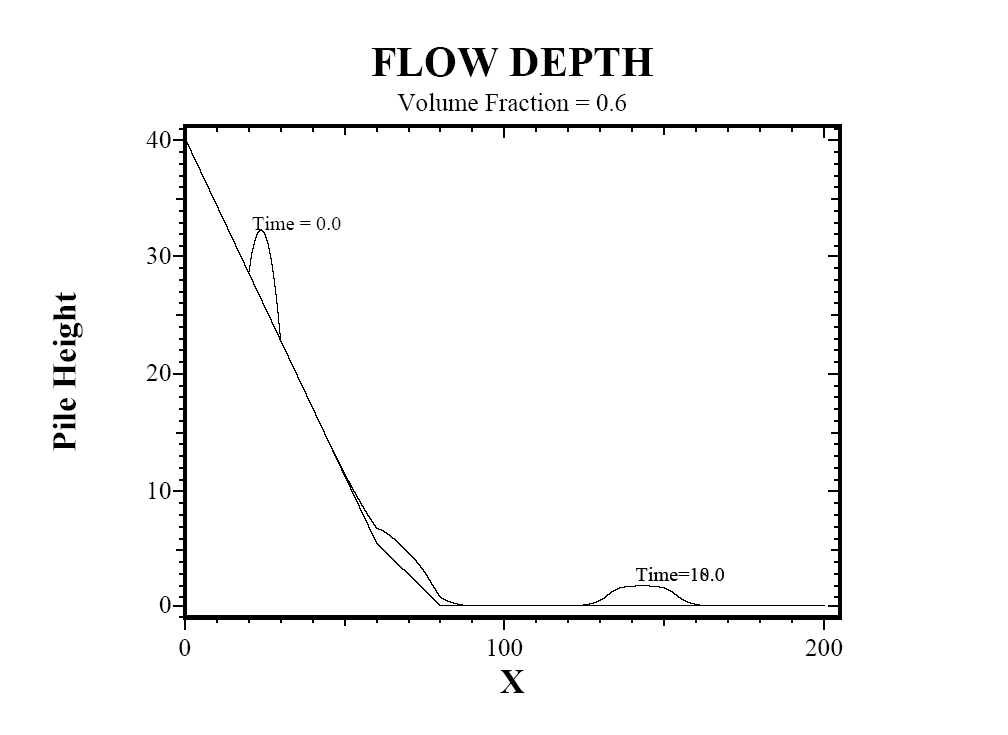
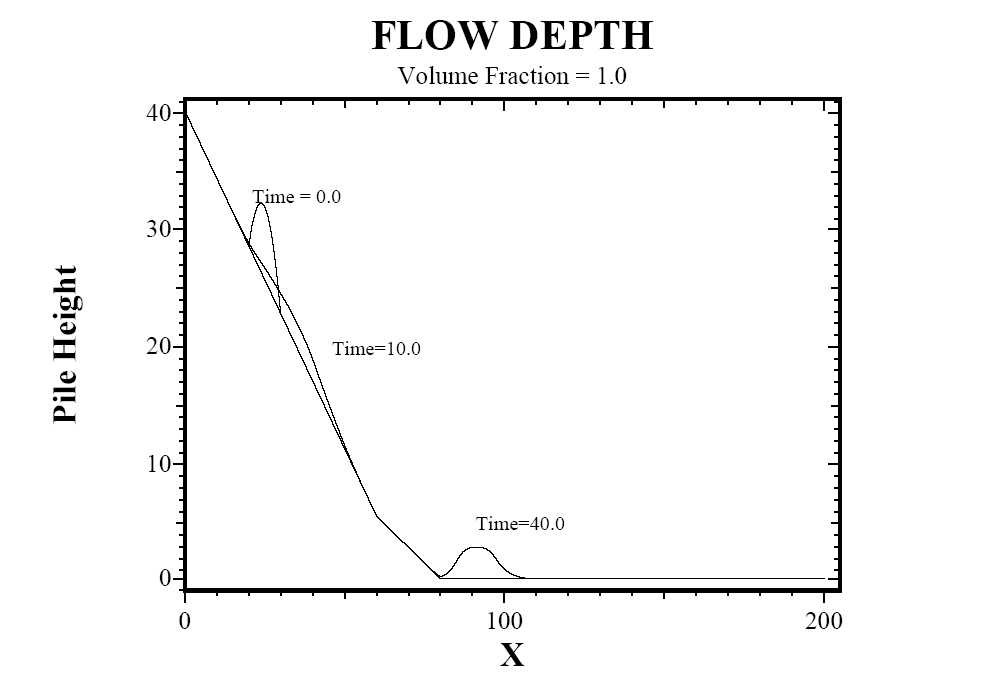
- On inclined plane, volume fraction changes small
- Interaction with ‘topography’ induces variation in φ
|
|
28
|
- Evolution equation for fluid velocity?
- Efficient methods for computing 2D system including realistic topography
|
|
29
|
|